









Web Hosting Calculators & Comparisons
Nine tools sit in this section. Seven price a specific hosting setup from figures you enter, and two put named options side by side. None of them runs on industry averages, because the only number that decides your budget is the one on your quote.
The advertised VPS rate usually expires. Enter the promotional price and what it renews at to see what three years really costs, not what the signup page implies.
Traffic rarely decides this one. Describe the workload, tick what you need to install or isolate, and see which tiers can carry it and which are ruled out.
Which tool you need
If you already know the hosting type and have a quote, go straight to the calculator for it. That is the shortest path to a number you can put in a budget.
If the tier is still open, start with the shared vs VPS vs dedicated comparison instead. Requirements like root access or single-tenant hardware rule out tiers outright, regardless of how much traffic you have.
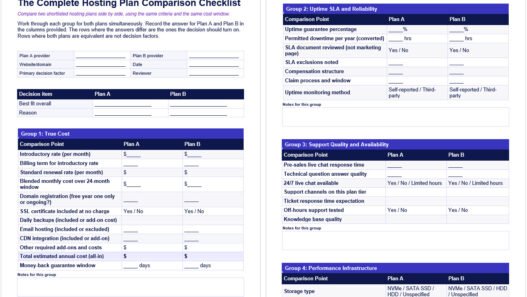
If you are choosing between two named providers, use a comparison rather than running each one through a calculator separately. The comparisons match billing periods and handle renewal assumptions, which is where side-by-side pricing usually goes wrong.
What actually drives a hosting bill
The tier sets the floor and the contract term moves the rate, since longer commitments almost always price lower per month than rolling monthly billing.
After that the extras take over. Per-site and per-environment charges catch agencies, because an additional site or a staging environment is often a separate monthly line rather than something included in the plan.
Usage overages catch everyone else. Visit allowances, bandwidth and storage caps all carry a price beyond the included amount, and providers rarely count usage the way your analytics does.
Administration time is the cost nobody enters in a spreadsheet. An unmanaged server is cheaper on the invoice and more expensive in hours, which is why these calculators give you a field for internal staff time.
The renewal rate decides more than the sticker price
Introductory hosting pricing is not a discount off a stable price. It is a first-term rate, and what follows it is a separate number that providers publish inconsistently.
Some list both openly. Others publish only the promotional figure and state that renewal pricing is subject to change without saying what it changes to. A few carry the same rate forward.
The arithmetic is what matters. Over a 36-month commitment, 24 of those months sit after the first year ends. Applying the promotional rate across all 36 is not slightly optimistic, it is wrong by design.
Every calculator here that models promotional pricing asks for the renewal rate as a separate input, and the comparisons will not name a cheaper option beyond twelve months without one.
Where this section sits
These tools cover hosting specifically. Browse the full calculator library for storage, performance, domains, email and security, or the comparison library for other head-to-head pages.
If you want background before putting numbers to anything, the guide to types of web hosting explains the categories, and choosing a web hosting provider covers what to weigh beyond price.
Every tool here runs in your browser. Nothing you type into a calculator is sent to us or saved. Where a page offers a quote request form, submitting it sends us the details you entered so that we can reply, and that is the only point at which anything is transmitted.
Treat every result as a planning estimate rather than a quote. These models cannot account for taxes, negotiated discounts or the overages a provider applies to your account, and each page states what it excludes alongside the result.